


Shades of Urban Greening Project
.
As cities located in hot and arid regions experience prolonged drought and intense heat waves, they are turning to greening efforts – to planting more trees and implementing green infrastructure projects throughout the city – to rapidly adapt to these climate change impacts.
.
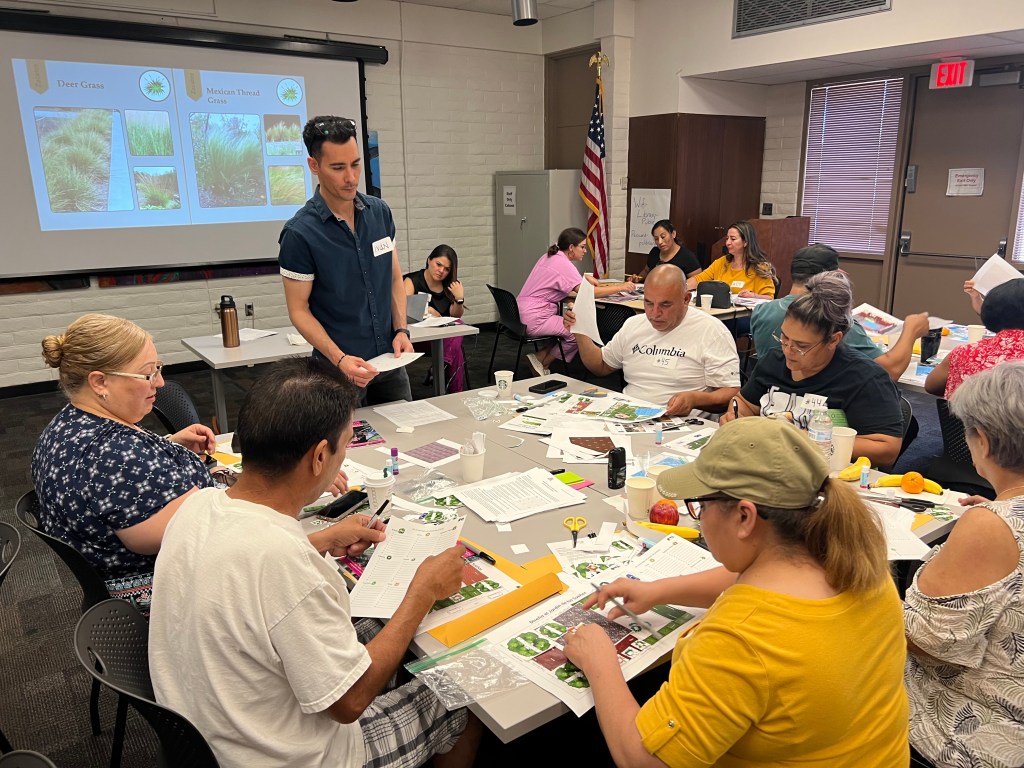
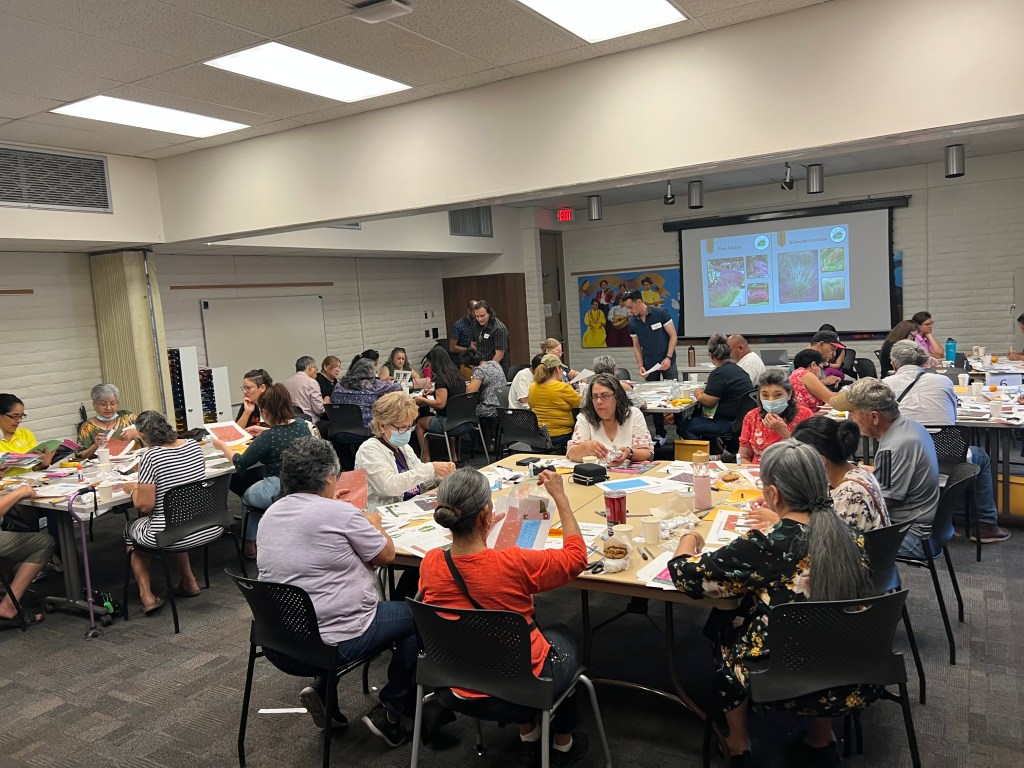
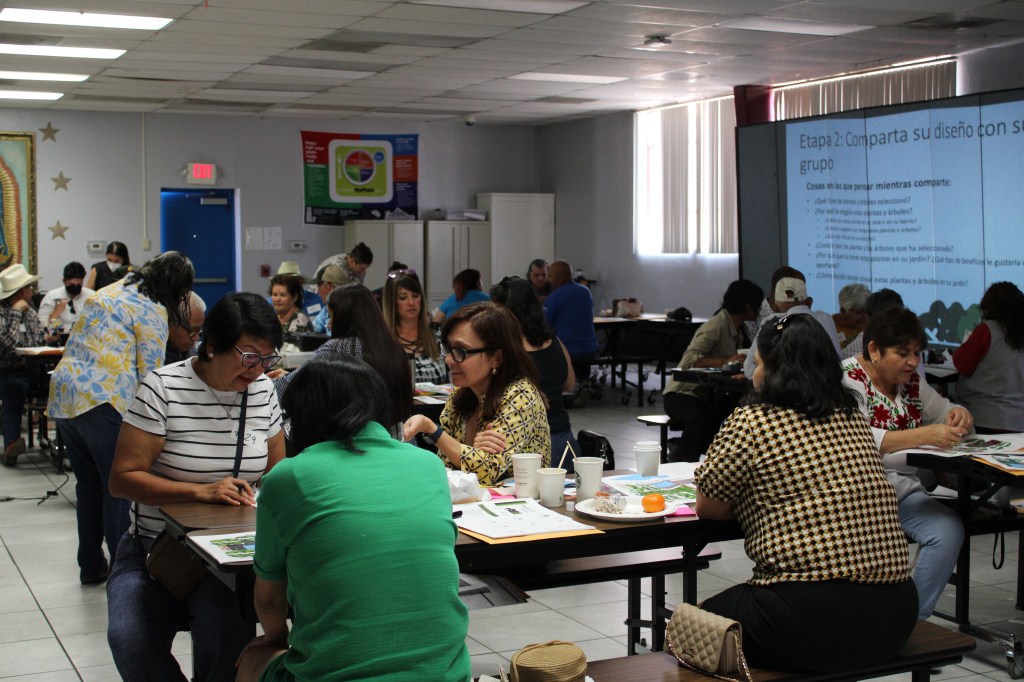
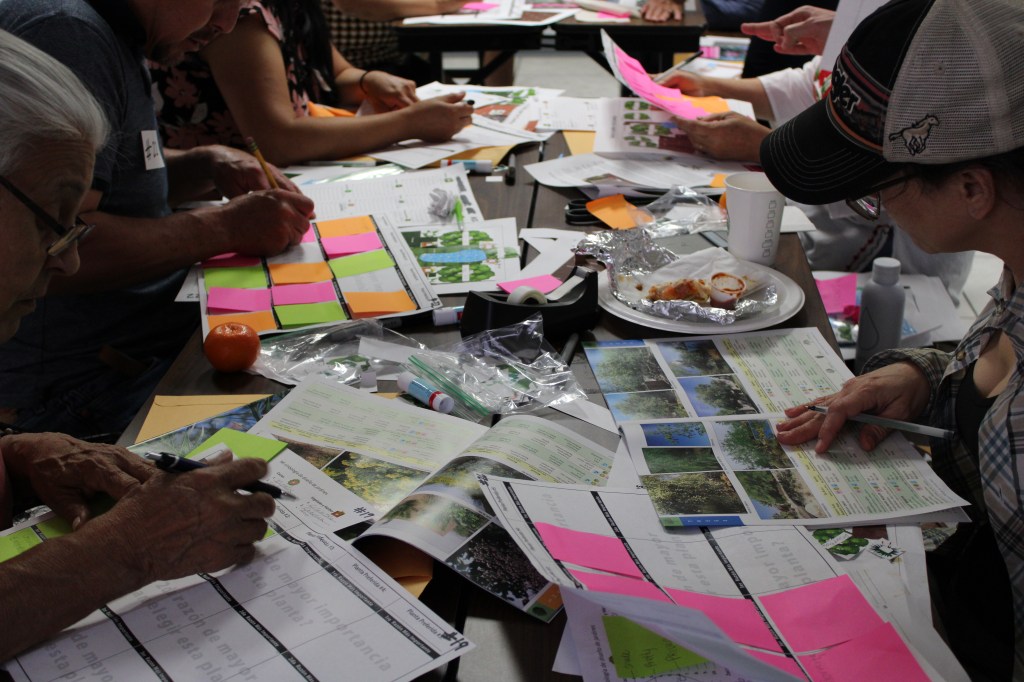
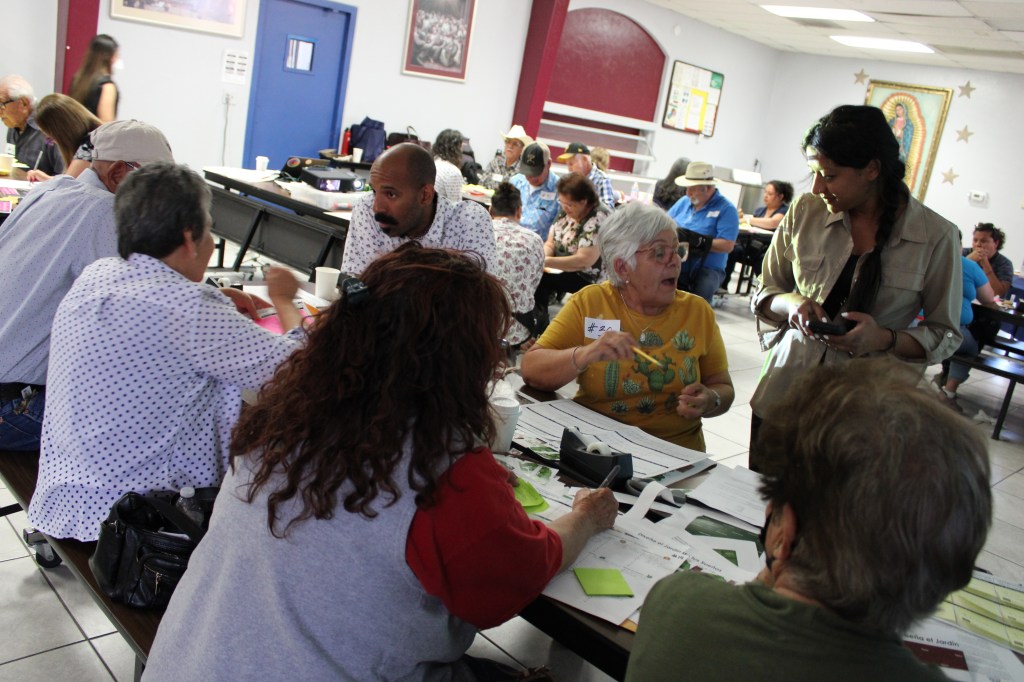
Low-income neighborhoods are priority areas for greening efforts, as these often lack vegetation and experience more heat and flooding than the rest of the city. However, not all plant choices deliver the same microclimate benefits. Communities may have different preferences, which directly affect the biophysical impacts and the ecosystem services derived from plants. This study seeks to fill this gap and broadly identify low-income communities’ preferences for greening in Tucson, and measure heat fluctuations, and impacts on the water and carbon cycle. We do this by conducting two workshops recruiting participants from disadvantaged communities in Tucson through a novel methodology based on gaming. We asked participants to design their dream garden to help us understand their plant preferences and expected ecosystem services.
.
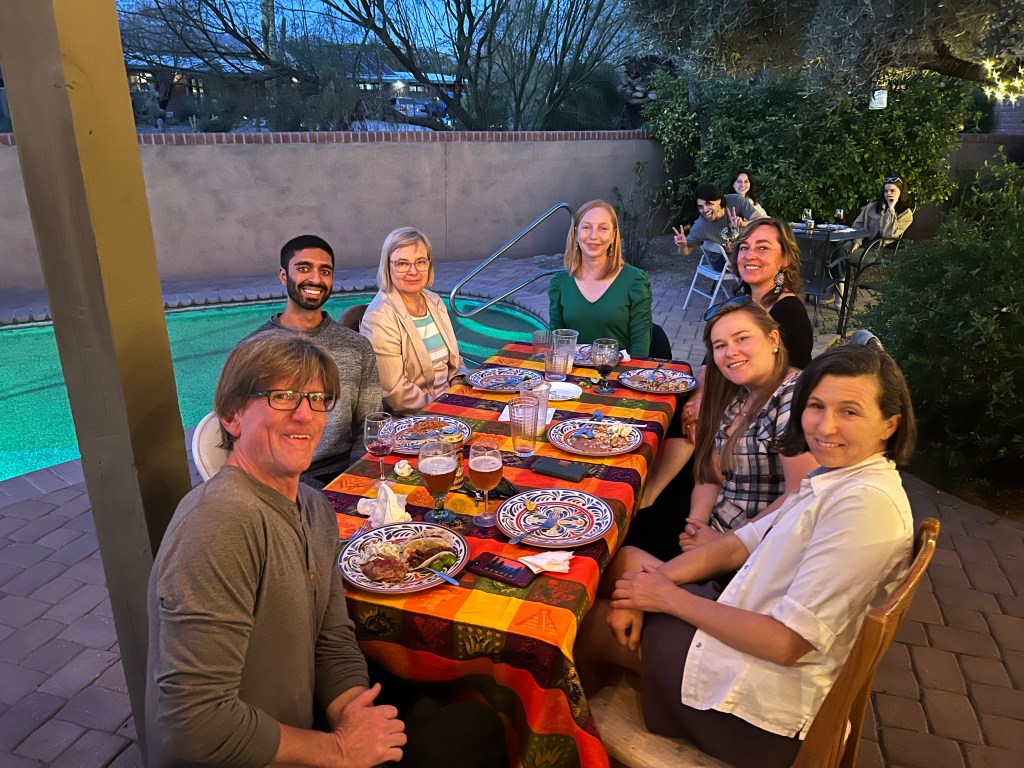
This study complements a collaboration with researchers from the University of Western Australia, in Perth, a city that is experiencing similar impacts from climate change to Tucson. In our city, we partnered with colleagues from Tucson Water’s Strom to Shade program and the Sonora Environmental Research Institute. Inc.
.
The project’s full title is “Assessing environmental and microclimate impacts of green infrastructure according to communities: Lessons from plant preferences in low-income neighborhoods in Tucson to build an international network”. The duration of the project was one year from January to December 2023.
.
It was funded by the University of Arizona Research, Innovation & Impact – International Collaboration Grant. Travel support was provided by the University of Western Australia Research Collaboration Awards. Scientific and administrative support was provided by the Udall Center for Studies in Public Policy and the Udall Foundation. Student support was provided by the Arizona Institute for Resilience. This project also benefitted from a graduate research assistantship from the University of Arizona.
 Adriana Zuniga-Teran