


Stakeholder engagement for the design of a stormwater park according to soil conditions
.
Hermosillo, Mexico is a city that experiences severe heat and occasional flooding and is deprived of vegetation. There are very few parks and greenspace, which could help mitigate these climate change stressors and hazards. The City has been exploring the use of green infrastructure (GI) as a potential decentralized solution and has become a leader in GI policies in the country. They have implemented some GI projects, but these show massive plant and tree die-offs, as a consequence of a lack of irrigation, maintenance, and the poor conditions of the soils.
.
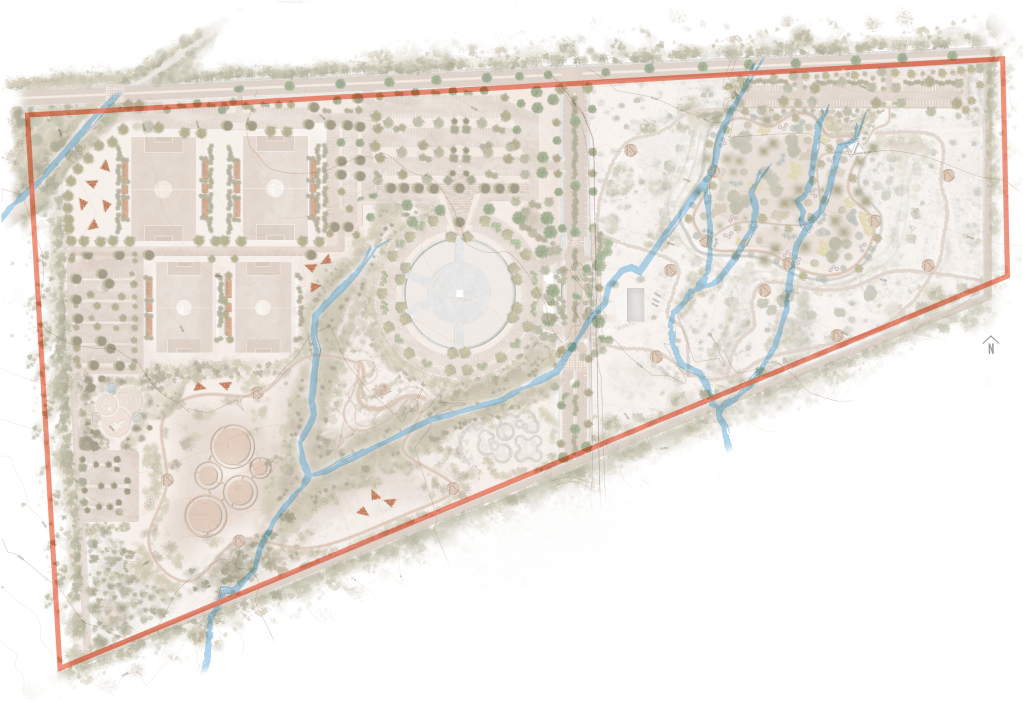
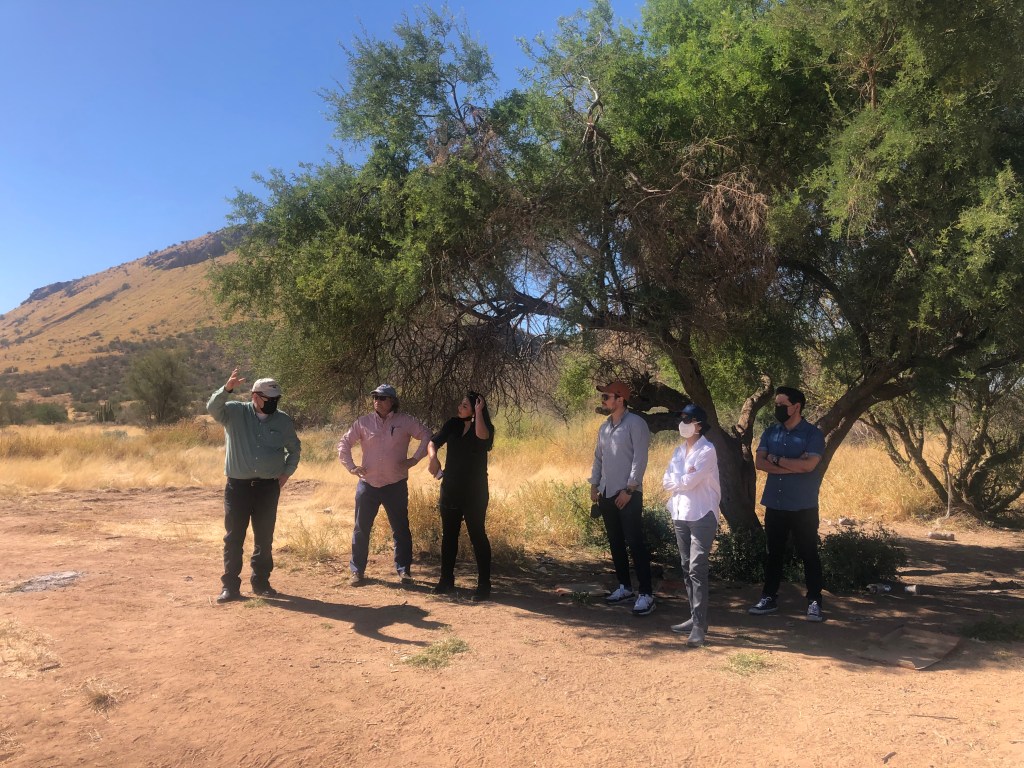
We partnered with Mexican scientists from UNAM and stakeholders in Hermosillo to conduct a participatory landscape design for a stormwater park. This park will be in the peripheries of the city, where there are soils suitable for stormwater infiltration. The land is owned by the municipality and the park will serve disadvantaged communities that lack access to greenspace. Graduate students from the University of Arizona designed the park with the input of stakeholders, who reviewed the different design stages. The park is also meant to provide employment opportunities and potential revenue that can support park maintenance in the long term.
.
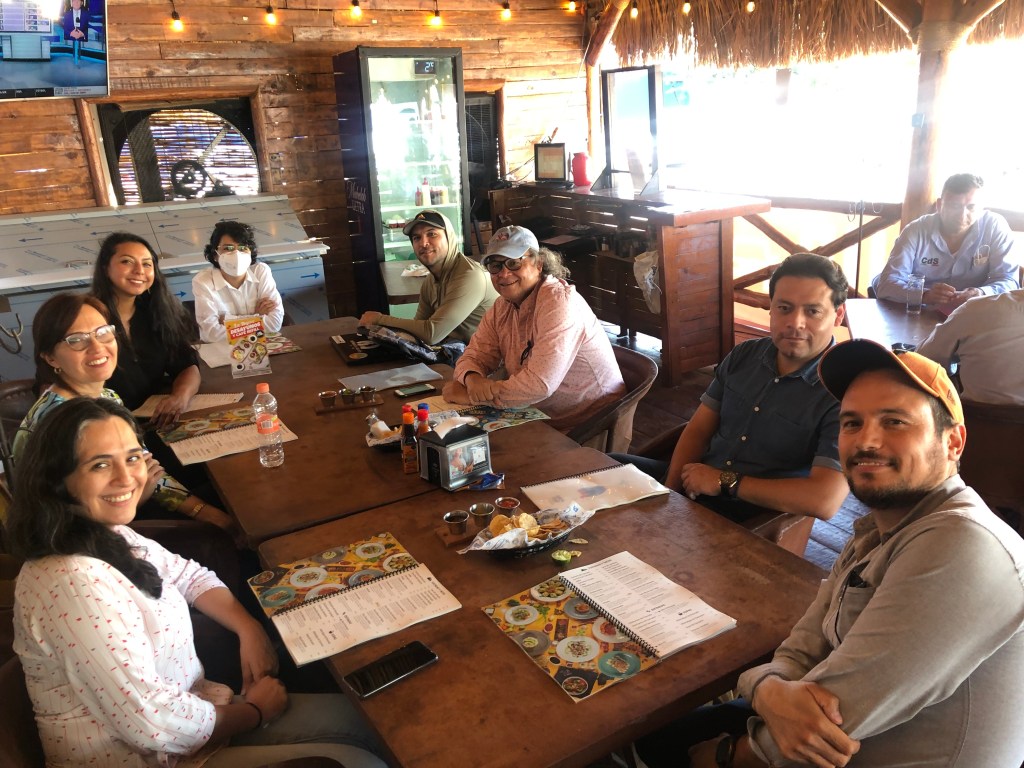
This was an interdisciplinary project that involved three tasks (1) a soil study – developed by the Mexican team, (2) the design and implementation methodology – developed by the UArizona team, and (3) stakeholder engagement with the Instituto Municipal de Planeación (IMPLAN), as well as the NGOs Watershed Management Group, and Caminantes del Desierto.
.
The project was funded by CAZMEX, a consortium between the University of Arizona and CONACYT that supported binational collaborations.
 Adriana Zuniga-Teran